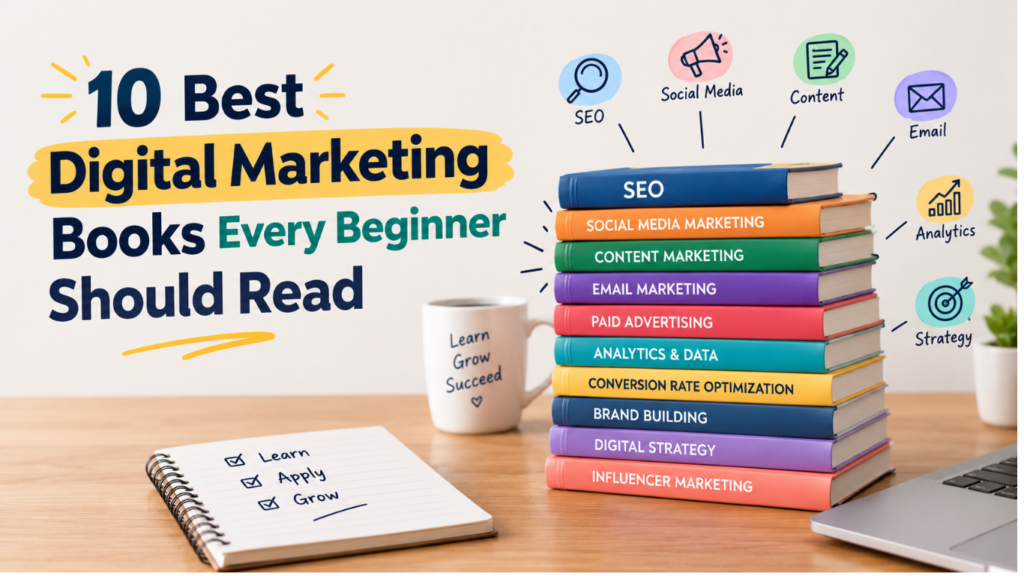
10 Best Digital Marketing Books Every Beginner Should Read
One useful way to start learning is by reading good digital marketing books. Books can help you understand the basic concepts, learn from real business examples, and develop a clear understanding of how marketing works. Instead of jumping between different online resources, you can follow a structured approach and learn one concept at a time. The best part is that you do not need to be a marketing expert to understand these books. Many are written in simple language and explain ideas through examples, stories, and practical lessons. In this article, we will explore the 10 best digital marketing books every beginner should read. These books cover different areas of marketing, from understanding customer behaviour to creating content, improving website visibility, and building a strong marketing strategy. Looking to apply these marketing lessons to your business? Explore Snowolive Services. Whether you are a student, a business owner, a freelancer, or someone planning a career in digital marketing, this list will help you choose the right book for your learning journey. Why Should Beginners Read Digital Marketing Books? The following books have been selected because they teach different skills that are useful in digital marketing. Some focus on the basics, while others help you improve your writing, understand customer behaviour, create better content, or develop a marketing strategy. You do not need to read all ten books at once. Start with the one that matches your current goal and gradually explore other areas. 1. Digital Marketing for Dummies by Ryan Deiss and Russ Henneberry Best for: Complete beginners Main focus: Digital marketing fundamentals This is a useful starting point if you are new to digital marketing and want to understand the different parts of online marketing before choosing a specialisation. Starting something new can be difficult when you do not understand the basic terms. You may hear words like SEO, conversion rate, landing page, email campaign, and paid advertising without knowing how they connect. Digital Marketing for Dummies by Ryan Deiss and Russ Henneberry helps readers understand the wider digital marketing process and the methods businesses use to reach potential customers online. The main benefit of learning from an introductory book is that you can build a foundation before moving on to advanced topics. You can learn why businesses need a website, how they attract visitors, and how marketing activities can support sales. For example, imagine that a small clothing store wants to sell kurtis online. It may need a website to display its products, SEO to attract people searching on Google, social media to show new designs, and online advertisements to reach potential buyers. All these activities are connected. Understanding that connection helps you see digital marketing as a complete process rather than a collection of separate tools. What you can learn from this book: Who should read it? Students, freshers, small business owners, and anyone who wants to understand digital marketing from the beginning can consider this book. Practical tip: After reading, choose a small business and identify three ways it could attract more customers online. This simple exercise will help you connect the concepts to a real business. 2. This Is Marketing by Seth Godin Best for: Understanding marketing strategy Main focus: Customers, trust, and meaningful communication This book helps beginners understand why successful marketing starts with people and their needs, not simply with selling products. Many beginners think marketing means promoting a product as widely as possible. They believe that if enough people see an advertisement, sales will automatically increase. But effective marketing requires more than visibility. You need to understand who your customers are, what they care about, and why your product or service is relevant to them. In This Is Marketing, Seth Godin explores the importance of understanding a specific audience, building trust, and creating value for the people a business wants to serve. Consider a business that sells handmade skincare products. Instead of targeting everyone, the business might focus on customers who prefer handmade products and want to understand the ingredients they use. The company can create educational posts, explain its product ingredients, answer customer questions, and share useful information. This approach helps people understand the brand before they decide whether to purchase. The lesson is simple: good marketing is not only about getting attention. It is also about creating a meaningful connection with the right people. What you can learn from this book: Who should read it? This book is suitable for aspiring marketers, entrepreneurs, freelancers, and anyone who wants to understand the thinking behind a good marketing strategy. Practical tip: Before promoting any product, write down who needs it, what problem it solves, and why someone should choose it over other options. 3. Jab, Jab, Jab, Right Hook by Gary Vaynerchuk Best for: Social media marketing Main focus: Valuable content and promotional messages A useful choice for people who want to understand how brands can communicate with audiences through social media. Social media has become an important way for businesses to communicate with customers. However, one common mistake is using every post to sell something. Imagine following a clothing brand on Instagram. Every day, the brand posts messages such as “Buy now,” “Shop today,” or “Get your favourite design.” After some time, you may stop paying attention because the content offers little value beyond selling. Now imagine that the same brand shares outfit ideas, styling tips, fabric information, and ways to care for clothes. When it occasionally introduces a new collection, you already have a reason to pay attention. This is the basic idea behind Jab, Jab, Jab, Right Hook by Gary Vaynerchuk. The book discusses giving audiences useful or engaging content and making promotional messages fit the platform and audience. The title uses a boxing comparison. The “jabs” represent the ongoing value a brand provides, while the “right hook” represents the direct request for action, such as making a purchase. For digital marketers, the important lesson is to balance helpful content with promotional content rather than asking for a sale